There is no single best time to visit Tanzania — and anyone who tells you otherwise is selling a brochure, not advice. The right months depend on what you want: a classic dry-season safari, the calving season on the green southern Serengeti plains, a Kilimanjaro summit window, or quiet weeks on the Pangani coast. This guide walks through the seasons month by month, region by region and trip by trip, with the honest trade-offs included — written with input from the TanzaGate team living in Tanzania.
What this page clarifies
The main topics are split into clear sections. Tables, notes and related links make the page easier to compare, not just read.
Why there is no single best month
Tanzania is large and its highlights run on different clocks. The wildebeest herds move through the Serengeti in a rough annual loop, Kilimanjaro has its own mountain weather, the southern parks dry out on a different rhythm than the north, and the coast follows the monsoon winds. A month that is perfect for river-crossing drama in the northern Serengeti is not automatically the best month for calving, for trekking or for a beach week.
The useful first question is therefore not "when is Tanzania best?" but "what should this trip deliver?". Once the priority is clear — predator action, green landscapes, summit chances, quiet beaches, school-holiday dates — the calendar almost sorts itself. The rest of this page gives you the raw material for that decision.
The seasons in brief
Tanzania has two rainy periods and two drier periods. The long rains fall roughly from April to May: this is the wettest, quietest stretch of the year, with lush landscapes, low visitor numbers and some practical limitations. The short rains arrive around November into early December — usually scattered afternoon showers rather than washed-out days.
Between them sit the two travel seasons most people mean when they ask about timing: the long dry season from about June to October, the classic safari window with sparse vegetation and animals gathering at water; and the green season from about January to March, warmer and occasionally showery, with dramatic skies, newborn animals and fewer vehicles. Both work — they simply deliver different trips.
January to March: green plains and the calving season
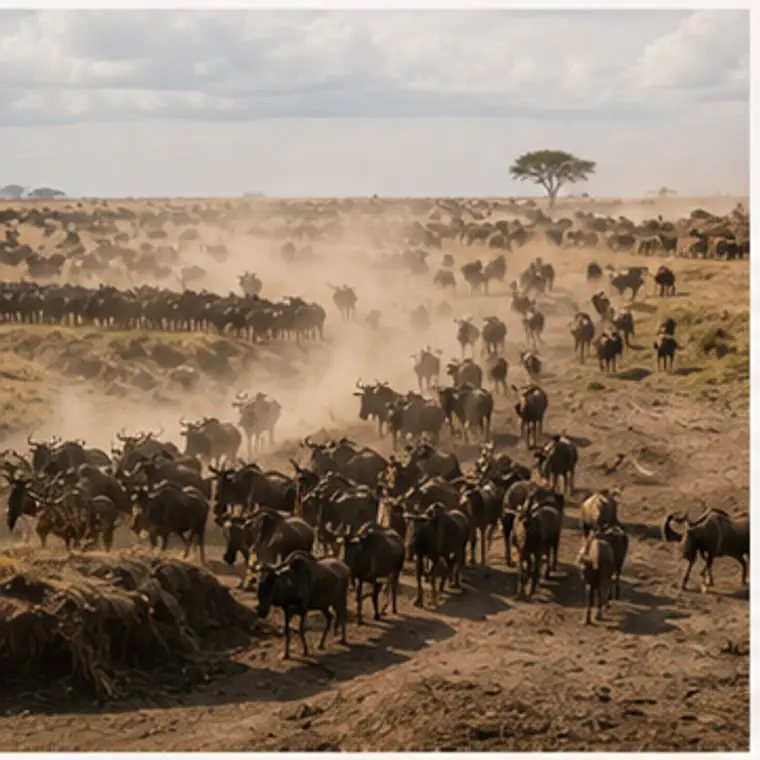
These months are the underrated stars of the Tanzanian calendar. The southern Serengeti and the Ndutu area turn green, and around February the wildebeest calving season peaks: hundreds of thousands of calves born within a few weeks, with predators never far away. For photographers and travellers who want intensity without peak-season crowds, this period is hard to beat.
The weather is mostly warm and fair with occasional showers, and visibility on the plains is good. January to early March is also one of the two classic Kilimanjaro climbing windows. The main caveats: popular Ndutu camps book out early, and exact timing of the herds varies with the rains from year to year — no serious planner guarantees a specific scene in a specific week.
April and May: the long rains
April and May are the wettest months across most of the country. Rain does not usually fall all day, but it falls often enough that some unpaved park roads become difficult, a number of seasonal camps close, and the coast and Zanzibar see their greyest weeks. Self-drive plans in particular deserve extra caution in these months, because wet black-cotton-soil tracks can stop even capable 4x4s.
The honest other side: this is the quietest, greenest and generally most affordable time of year. Parks like Ngorongoro and the central Serengeti still deliver excellent wildlife viewing, lodges have space, and travellers who accept a flexible itinerary and the chance of an afternoon downpour can have remarkable days almost alone. It is a trade, not a write-off — but it suits experienced or relaxed travellers better than tightly scheduled first trips.
June to October: the classic dry season
This is the period most safari guides mean by "the best time". Vegetation thins out, water becomes scarce, and wildlife concentrates around rivers and waterholes, which makes game viewing more predictable. Days are sunny and mild, nights can be surprisingly cool, especially on the Ngorongoro crater rim. Roads and park tracks are at their most reliable, which also makes this the most forgiving window for self-drive itineraries.
From roughly July to October the migration herds are usually in the northern Serengeti, where the famous Mara river crossings can happen — can, not will: crossings depend on the herds and the water, and no operator can schedule them. The trade-off of the dry season is demand. These are the busiest months, popular camps fill many months in advance, and prices sit at the top of the annual range. Book early and expect company at well-known sightings.
November and December: the short rains
The short rains usually arrive sometime in November: brief, scattered showers that green the landscape without shutting it down. Visitor numbers drop after the October peak, the light turns dramatic, and migratory birds arrive in numbers. For travellers who want a quieter safari and accept slightly less predictable weather, this shoulder season can be excellent value.
Late December is its own story: the holiday weeks around Christmas and New Year are a short, sharp high season with strong demand on flights, lodges and the coast. If you are tied to those dates, plan early; if you are flexible, the first half of December is often the calmer, better-priced choice.
Best time by region: the Northern Circuit
The Northern Circuit — Tarangire, Lake Manyara, Ngorongoro and the Serengeti — is genuinely an all-year destination, as long as the route matches the month. Ngorongoro crater holds resident wildlife year-round. The central Serengeti around Seronera is reliable in every season. Tarangire is at its strongest in the dry months from about June to October, when huge elephant herds gather along the Tarangire river.
Within the Serengeti, the migration sets the regional logic: southern plains and Ndutu roughly December to March, the western corridor towards May and June, the north from about July to October. A good itinerary chooses the region to match your month rather than forcing one fixed route — which is exactly the kind of judgement that benefits from someone on the ground.
Best time by region: the Southern Circuit
The southern parks — Ruaha and Nyerere (the former Selous) — are more strongly seasonal than the north. The dry season from about June to October is clearly the best window: wildlife concentrates along the rivers, the bush opens up, and boat safaris on the Rufiji are at their most rewarding. This is the season we recommend for almost everyone heading south.
During and right after the long rains, parts of the south become hard to reach, some camps close entirely, and the thick green bush hides wildlife well. The south rewards travellers who come in the right months and is honest about being a poor fit in the wrong ones. Most visitors combine it with a fly-in arrangement rather than long overland drives.
Kilimanjaro: the climbing windows
Kilimanjaro can be climbed year-round, but two windows offer the best odds of stable weather: roughly January to early March, and June to October. January and February tend to be slightly warmer with clearer mornings; the mid-year window is colder but very stable and coincides with the main safari season, which makes safari-and-trek combinations easy to plan.
The long rains of April and May are the most challenging period on the mountain: wet trails, poor visibility and a less pleasant camp experience, even though the routes remain open. November sees lighter rain that mostly affects the lower forest zone. Whatever the month, remember that weather at almost 6,000 metres is never guaranteed — the calendar improves your chances, route choice and enough acclimatisation days improve them more.
Pangani, the coast and how Zanzibar compares
The coast around Pangani and Tanga follows the same broad pattern as the rest of the country: the driest, most reliable beach weather runs from about June to October, with a second pleasant stretch from December to February — warmer and stiller, ideal for travellers who like it hot. The long rains of April and May are the coast's low point, with the highest chance of grey, wet days.
Zanzibar shares this rhythm, so the timing question between the island and the Pangani coast is less about weather and more about style: Zanzibar offers more infrastructure, hotels and nightlife; Pangani offers quiet beaches, dhow trips and a coast that still feels local. After a dry-season safari, both connect well — Pangani simply requires less travel logistics from the northern parks and suits travellers who want the sea without the scene.
Best time by trip type
For a first classic safari, June to October offers the most predictable game viewing, at the cost of higher demand. For calving, green landscapes and photography, January to March is the strongest choice. For possible river crossings, July to October in the northern Serengeti — booked early and promised by no one. For self-drive trips, the dry months are clearly the safer frame, because wet-season mud raises the stakes for drivers without local experience.
For Kilimanjaro, aim for January to early March or June to October. For beach-focused trips, June to October or December to February. Families tied to school holidays usually land in July, August or the Christmas weeks — all workable, all busy, all worth booking early. And travellers whose priority is solitude and value should look hard at November, early December and even the green months, with expectations set honestly.
If you are unsure where your trip fits, this is exactly what a short enquiry is for: Ralf Degenhardt and the TanzaGate team live in Tanzania, see the seasons first-hand and will tell you plainly if your preferred dates and your preferred experience do not match — and what to adjust.